
Why Gulf Coast Homes Experience Foundation Movement (And What Homeowners Should Watch For)
If you own a home in Pensacola, Daphne, Pascagoula, or anywhere along the Gulf Coast, you’ve probably heard a neighbor talk about a cracked wall or a door that won’t close right. Foundation movement is one of the most common problems for homes in this region. The good news is that the causes are well understood, and the warning signs show up early if you know where to look.
We’ve already covered how Gulf Coast weather affects your home’s foundation. This guide goes a step further. It explains why homes here move in the first place and which signs are worth acting on.
Why the Gulf Coast Is Hard on Foundations
Every foundation sits on soil, and the soil here doesn’t stay put. Several regional conditions work together to put stress on homes.
Soft, shifting soils. Much of the coastal region is built on sandy, silty, or clay-rich soils that don’t carry weight consistently. Clay swells when it absorbs water and shrinks as it dries out. That cycle moves the ground under your home, and the foundation moves with it.
A high water table. Near the coast, groundwater sits close to the surface. Saturated soil loses strength, and it can wash away or settle under a home’s footings over time.
Heavy rain and storms. The Gulf Coast gets intense rainfall, and tropical systems can drop a lot of water fast. When drainage is poor, water collects around the foundation and softens the soil that supports it. Dry stretches then pull that moisture back out. The repeated swing between soaked and dry is hard on any structure, and it’s a big part of how water damages your foundation.
Humidity and moisture in crawl spaces. Many homes in the region sit on pier-and-beam or crawl space foundations. Humid air and groundwater moisture can leave wood framing damp, invite rot and mold, and weaken the supports holding up your floors.
Trees, drainage, and construction history. Large tree roots pull moisture from the soil. Gutters that dump water near the house concentrate it in one spot. Fill soil that wasn’t compacted well during construction can settle unevenly years later.
Warning Signs to Watch For
Foundation problems rarely appear overnight. These are the signals worth paying attention to:
- Cracks in interior walls or drywall, especially diagonal cracks running from the corners of doors and windows
- Cracks in brick or block exterior walls, particularly stair-step patterns along mortar lines
- Doors and windows that stick, won’t latch, or have uneven gaps around the frame
- Sagging, bouncy, or uneven floors, including soft spots in a room
- Gaps between walls and the ceiling, floor, or trim
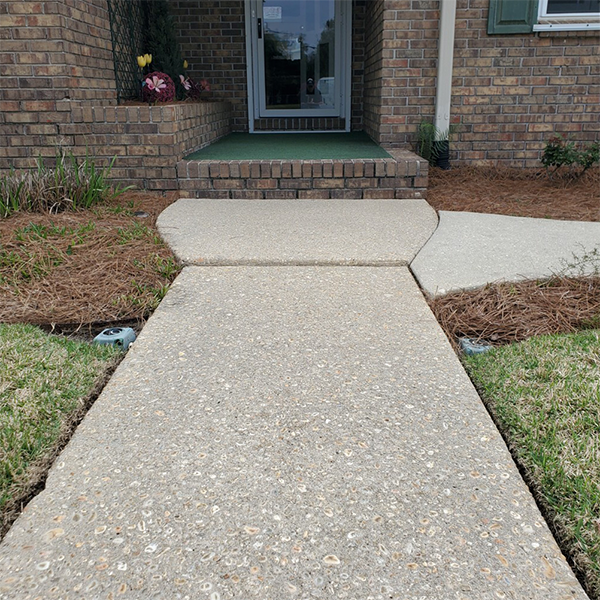
- Sunken or cracked concrete on driveways, patios, walkways, or pool decks
- A sagging or cracked garage lintel above the door opening
- Damp, musty, or visibly wet crawl spaces, with standing water, sagging insulation, or rotting wood
- Wood piles showing rot or moisture damage, common in coastal homes raised on piles
One hairline crack isn’t necessarily a crisis. What matters is whether it’s growing, whether several signs show up together, and whether they get worse after heavy rain.
What Different Types of Movement Mean
Not all movement is the same. Settlement, where part of the foundation sinks, tends to show up as sloping floors and cracks that widen toward the top of a wall. Moisture-driven movement often follows the seasons, with doors that stick after a wet stretch and loosen when it dries. Crawl space problems frequently begin as a moisture issue and become structural when wood supports weaken.
A trained inspector can tell these apart, and the difference matters because each one calls for a different fix.
What Homeowners Can Do Now
You don’t need to wait for a full inspection to take useful first steps:
- Check your drainage. Keep gutters clear and make sure downspouts discharge several feet from the house. The ground around the foundation should slope away from it. If water regularly collects near your home, foundation waterproofing and yard drainage can address it at the source.
- Document what you see. Take dated photos of cracks and measure them. That gives you a record of whether they’re changing.
- Look in your crawl space, or have someone do it. Standing water, sagging vapor barriers, and damp wood are all worth noting.
- Watch what happens after storms. New cracks or sticking doors that appear after heavy rain are a useful clue.
- Don’t cover it up. Patching drywall or repainting hides the evidence without fixing the cause.

How Foundation and Crawl Space Problems Get Fixed
The right repair depends on what’s causing the movement.
For homes that are settling, helical piers can stabilize the structure by transferring its weight to more stable soil. You can see the full range of solutions on our foundation repair page.
If moisture is the root issue, crawl space encapsulation helps control humidity, protect framing, and improve the air quality in your home. When floors have started to sag, floor supports and floor joist repair restore stability from below. Our crawl space repair page covers how these fit together.
Coastal homes raised on wood piles may need pile repair. Sunken driveways, patios, and pool decks can often be raised through concrete lifting and leveling. If the cracking is centered on the garage opening, see our garage lintel repair service.
Local Foundation Help Across the Gulf Coast
MDH Foundation Repair is locally owned and works with homeowners across Alabama, Florida, and Mississippi. Every area has its own soil and moisture conditions, and that local knowledge shapes the repair recommendation.
- Florida Panhandle: see our page on foundation and crawl space repair in Pensacola.
- Alabama’s Eastern Shore: see our page on foundation repair in Daphne.
- Mississippi Gulf Coast: see our page on foundation repair in Pascagoula.
You can see every community we serve on our service area page, and find more homeowner guides in the MDH Learning Center.